POINT GUARD:
Departure:
Michael Carter-Williams was sent packing to the Los Angeles Clippers along with the Sixers 2018 1st round draft pick in exchange for Jordan Crawford and the Clippers 2017 and 2019 1st round draft picks. The Sixers felt that it was the right time for a changing of the guard at the starting PG position and, unfortunately, MCW found himself as the party in question. Following a 2015/16 season with a stat line of 31.9min/10.9ppg/0.7spg/3.1rpg/2.45a:to/.362fg%/.280-3p%, the Sixers were looking to move on for youth to blend some experience with their copious amounts of inexperience, especially at the offensive general position. Why MCW wasn’t necessarily underperforming, especially considering his age and experience, the PG position wasn’t producing well enough for the Sixers to compete offensively and defensively. With the recent luck they’ve had in the draft, the Sixers realized it was time to start competing before their core departed due to free agency. Though, MCW is trying his best to make the Philadelphia front office regret their decision with his current stat line of 36.6min/9.3ppg/2.4spg/3.0rpg/1.32a:to/.457fg%/.343-3p%. On the face, while it appears that his ball distributing skills have been absent (2015: 2.45a:to vs 2016: 1.32a:to), his shot selection (2015: .362fg%/.280-3p% vs 2016: .457fg%/.343-3p%) and defensive prowess (2015: 0.7spg vs 2016: 2.4spg) seem to have improved though the volume of shots may have been decreased, as indicative of the reduction in scoring (2015: 10.9ppg vs 2016: 9.3ppg).

Maybe Michael Carter-Williams was sent packing due to his questionable hairstyle, rather than his questionable play.
Arrival:
Briefly following the MCW deal, the Sixers struck a deal with the Detroit Pistons to acquire veteran ball handler, Deron Williams, in exchange for Terran Petteway. As far as sheer present ability is concerned, this was a no-brainer for Philadelphia as they had plenty of depth at SG with incumbent starting SG James Young and the (at the time) recently acquired Avery Bradley (to be discussed later). Considering the Piston’s financial situation, the Sixers were able to get a high caliber, established PG at a reasonable price. If Deron’s 2015 stat line was an indication (30.6min/19.3ppg/0.7spg/2.2rpg/2.32a:to/.450fg%/.346-3p%), the Sixers were in line to receive a considerable upgrade at PG. As for today, Deron has done nothing less than to vindicate the Sixers for taking a chance on the veteran PG (35.6min/19.8ppg/1.1spg/2.5rpg/2.44a:to/.510fg%/.490-3p%).

Deron Williams ponders the possibility of what he could do for the Sixers or, instead, what he can do for his bank account this coming off season.
Verdict: IMPROVEMENTWhile the year is early and considering this evaluation is basically focused on present day production and not prospect, it appears that Philly has improved drastically over last year’s PG situation. Though the most glaring advancement has been on the offensive side of the ball (MCW 2015/16: 10.9/9.3ppg, .362/.457fg%, .280/.343-3p%, 2.45/1.32a:to vs Deron 2015/16: 19.3/19.8ppg, .450/.510fg%, .346/.490-3p%, 2.32/2.44a:to) as Deron has delivered with the increased spotlight as MCW seems to be declining, although he’s in more of a support role in the move to LA. The defensive comparison between the two appears to be similar (MCW 2015/16: 0.7/2.4spg, 3.1/3.0rpg vs Deron 2015/16: 0.7/1.1 spg, 2.2/2.5rpg) even if MCW has the slight edge and should continue to improve.
SHOOTING GUARD:
Departure:
Sent away in the aforementioned Deron Williams deal, Terran Petteway was simply on the short end of a golden opportunity for the 76ers. As the 19th pick in the previous year’s draft, Petteway didn’t have much time to prove himself, even if his rookie season showed potential, Petteway was sitting behind a younger, more established James Young plus the newly acquired Avery Bradley. Although he may have a smaller role on the powerhouse that is the Detroit Pistons, Petteway is making the most of his time (14.0min/8.0ppg/0.2spg/1.5rpg/1.14a:to/.473fg%/.571-3p%), as he did in Philly, admirably.

Reports say that the 76ers decided to part ways with Petteway due to his desire to be a nudist. Obviously, Detroit is down with that kind of thing, “not that there’s anything wrong with that”.
Arrival:In a more surprising move, the 76ers sent away their highly touted defensive prospect, Willie Caulie-Stein, for veteran defensive stalwart, Avery Bradley. The initial reaction was surprise in the GM community as the Sixers seemed to lose their depth at a center position that they were already struggling to establish to further bolster their already sufficiently stocked SG roster. It took little time for the community to see the whole picture of the Sixers plan as they immediate shipped their excess SG depth for PG help, a position they needed dire help with. That being said, the intent in acquiring Bradley was to further assert the franchise’s goal to strengthen the team defense. With the offensive side of the ball being firmly controlled by number one overall pick, Jabari Parker, the organization has made their decision in supporting Parker as the go to scorer while defending sufficiently around him. Being that defensive production is a little harder to gauge than offensive, it doesn’t bring much light to the result of this adjustment while looking at stats alone, but the obvious decline in offensive stats cannot be overlooked in this case (Bradley 2016: 27.1min/6.8ppg/0.6spg/1.8rpg/0.85a:to/.423fg%/.333-3p%). Bradley has been just dreadful offensively, so bad that his offensive detriment to the team might be completely erasing his defensive contribution.
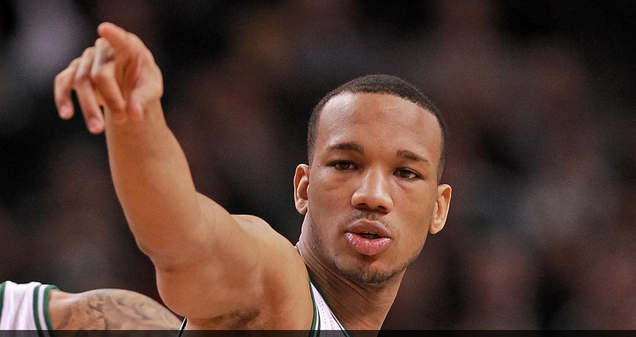
Bradley has been so bad offensively that he might actually be scoring in the wrong basket. Maybe he just needs someone to point him in the right direction.
Verdict: DECLINE
Since Bradley’s arrival, the team’s defense hasn’t improved significantly enough to overlook his lack of offensive ability. Originally coveted to be a potential 3nD SG, Bradley hasn’t been able to find his stroke from distance from past years, especially in comparison to Petteway’s production (Bradley 2016: .333-3p% vs Petteway 2016: .571-3p%). Though the year is early and considering Bradley is just starting to shake off an early season injury, Bradley needs to start proving himself offensively and defensively because the previous Sixers starting SG, James Young, is forcing him out of the job.
SMALL FORWARD:
No change. Jabari Parker trends to be the starting SF on the Sixers roster for years to come, albeit they could use some added depth at this position.

Jabari is getting tired of having to carry this team himself, though hopefully he can keep his clothes on and, in doing so, remain in Philadelphia, unlike Petteway.
POWER FORWARD:
Departure:
There were no significant PF departures from the 76ers dating back to last season.
Arrival:
Signed with a 4 year/$18m contract, 24 year old Jarred Sullinger was acquired to provide added depth at power forward behind incumbent, Adreian Payne. Unfortunately, Sullinger’s year was cut drastically short as he suffered a torn knee tendon. With only 12 games played, there was not enough playing time to really get a picture of what Jarred brought to the team. However this tragedy provided opportunity for veteran Sixer, Travis Wear, to get a shot to play for a contract as he becomes a free agent at season’s end.

Hopefully Sullinger can stay healthy next season, so he can flex his muscles and prove he was worthy of that contract.
Verdict: IMPROVEMENT
Since the Sixers did not lose any depth at the PF position, it would be unfair to say that this position’s outlook declined. Being that he is only 24, Sullinger still has plenty of time to prove himself in a Sixer uniform. Though it will be interesting to see how Wear settles in behind Payne while playing for a contract, it might put added pressure on Sullinger to perform upon his return, which only further benefits the franchise.
CENTER:
Departure:
Though the popular opinion is that the 76ers gave up on him too early, the previous 7th overall pick, Willie Cauley-Stein, was shipped to Chitown as previously mentioned. The big man, while being an offensive liability, was as sure thing as you could get to be a future defensive force in the CSL. At 7’0” and 254 lbs, WCS was ready to compete now in the paint at a high level and proved it early. To spark a fire in his play, the Sixers chose to stick with the slightly more experienced, Nerlens Noel, to carry on as the starting center on the young roster. Though he shows similar promise, Noel (6’11” and 226 lbs) is markedly smaller than the departing Cauley-Stein and is more of a work in progress. However, reports are that the Chicago deal would only involve WCS and not Noel, though there is much speculation on its validity and the degree of Philadelphia’s involvement in this deal. Like Petteway, WCS is producing, as advertised, in his new role with the added bonus of slightly improving his offensive standing (Cauley-Stein 2016: 17.5min/3.6ppg/0.6spg/3.3rpg/1.2opg/1.5bpg/.500fg%/.500ft%) especially compared to Noel (2016: 25.9min/8.4ppg/1.3spg/5.1rpg/0.9opg/2.5bpg/.588fg%/.622ft%). When extrapolated to equivalent floor time to Noel’s involvement, then numbers appear to be even closer (Cauley-Stein stats extrapolated to 25.9min: (5.3ppg/0.9spg/4.9rpg/1.8opg/2.2bpg). Now of course this is all theoretical, but it’s easier to compare the two with the same sample size.

Confusing Chicago with Hawai’i, Cauley-Stein is starting to regret his choice of attire, thinking that he won’t fit in with his new Bulls teammates.
Arrival:
To fill the void of WCS, the Sixers dipped into free agency and signed a similarly young prospect, Steven Adams, to a 4 year/$18.4m contract. While Adams doesn’t have the pedigree of Cauley-Stein, he plays a similar style of ball and possesses similar size (7’0” and 255 lbs) to the departing center. Taking a look at the early going production of the New Zealander, his stat line of 2016 (20.8min/4.9ppg/1.1spg/3.6rpg/1.4opg/1.2bpg/.410fg%/.455ft%) suggests that he is providing satisfactory relief off the bench for Nerlens Noel. Projecting his stats to our common denominator of 25.9min of floor time: (6.1ppg/1.4spg/4.5rpg/1.8opg/1.5bpg), Adams seems to compare to WCS by being a small improvement offensively while being a slight downgrade defensively.
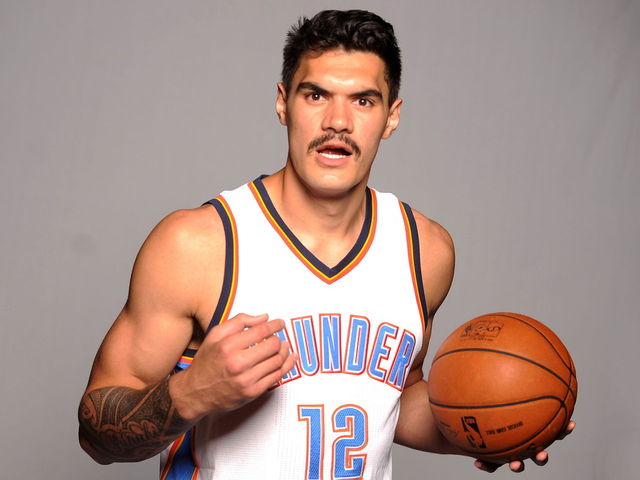
Hailing from New Zealand, Adams always aspired to be a professional cricket player. Once we informed him he would be indeed be playing professional basketball and not cricket, the Kiwi appeared to be quite surprised.

He appears to be much happier at a cricket event rather than being paid to play basketball for a struggling Philadelphia franchise.
Verdict: DECLINE
The immediate departure of the prospect of WCS and acquisition of Adams doesn’t affect the Sixers immensely at the present, however, the potential WCS is thought to have may cause the front office to kick themselves in the long run, especially considering the non-factor Avery Bradley has proven to be in the early going of 2016. Again, as this article considers the present day change from last year’s season, it is this writer’s opinion that if the Sixers truly wanted to bolster their defense around Parker, the substitution of Adams for WCS did not accomplish that task and, therefore, their center depth has decline in comparison to last season.
Overall the bottom line is that the Sixers haven’t improved as indicated by their unimpressive 5-9 record to begin this first month of the 2016/2017 season. Hopefully, it’s being caused by bad management rather than making the wrong transactions, because if that is the case, it doesn’t seem like there is any hope in sight for this struggling franchise.